Should Your Business Be an LLC or an S-Corp?
This is one of the most common questions small business owners ask.
And it almost always comes up at the wrong time.
Usually in March, when someone is staring at a tax bill that's bigger than they expected, and a friend mentions that their accountant helped them save thousands by switching to an S-Corp.
So now you're wondering if you've been leaving money on the table.
Maybe. Maybe not.
Here's what actually matters and how to think through the decision the right way.

How to Pay Yourself From Your LLC Without Messing Up Your Taxes
Most LLC owners handle this the same way.
They open their business account, transfer some money to their personal account when they need it, and move on.
No system. No set amount. No plan.
And then tax season arrives and they have no idea why they owe so much.
Paying yourself from your LLC sounds simple. But the way you do it has real tax consequences. Most people don't find that out until it's too late to fix.
Here's what you actually need to know.
What the IRS Considers a Business Expense (And What They Don't)
Every business owner wants to write things off.
That's not greed. That's just smart.
If you spend money to run your business, you shouldn't be taxed on it.
The IRS actually agrees with you on that.
The problem is most people don't actually know where the line is.
So they either miss deductions that would save them real money, or they push too far and flag their return for a closer look.
Here's what the IRS actually uses to decide whether an expense counts.
How to Reduce Business Expenses Without Hurting Growth
Cutting expenses is one of the fastest ways to improve profit.
But many business owners hesitate because they fear slowing growth. The concern makes sense. If you cut too aggressively, you risk hurting revenue, morale, or momentum.
The key is not cutting randomly. It is cutting intentionally.
Here is how to reduce business expenses without damaging growth.

How to Know If Your Business Can Afford to Hire
Hiring is one of the biggest decisions a small business owner makes.
It usually starts with one thought:
“I’m overwhelmed. I need help.”
But the real question is not whether you need help. It’s whether your business can afford it.
Hiring too early creates stress. Hiring too late creates burnout.
Here’s how to know if your business is financially ready to bring someone on.
What Is a Healthy Profit Margin for a Small Business?
One of the most common questions business owners ask is:
“What is a healthy profit margin for a small business?”
It’s a fair question. If you do not know what is normal, it is hard to know whether your business is performing well or just staying afloat.
The short answer is that it depends on your industry, but there are general benchmarks that can help you evaluate where you stand.
Cash Basis vs Accrual Accounting: Which Is Better for Small Businesses?
If you’ve ever talked to an accountant, you’ve probably heard the terms cash basis and accrual accounting.
Most small business owners nod along without fully understanding the difference. But the accounting method you use affects how your profit looks, how taxes are calculated, and how clearly you can see what’s actually happening in your business.
Here’s a simple breakdown of cash basis vs accrual accounting, and how to know which one makes sense for you.
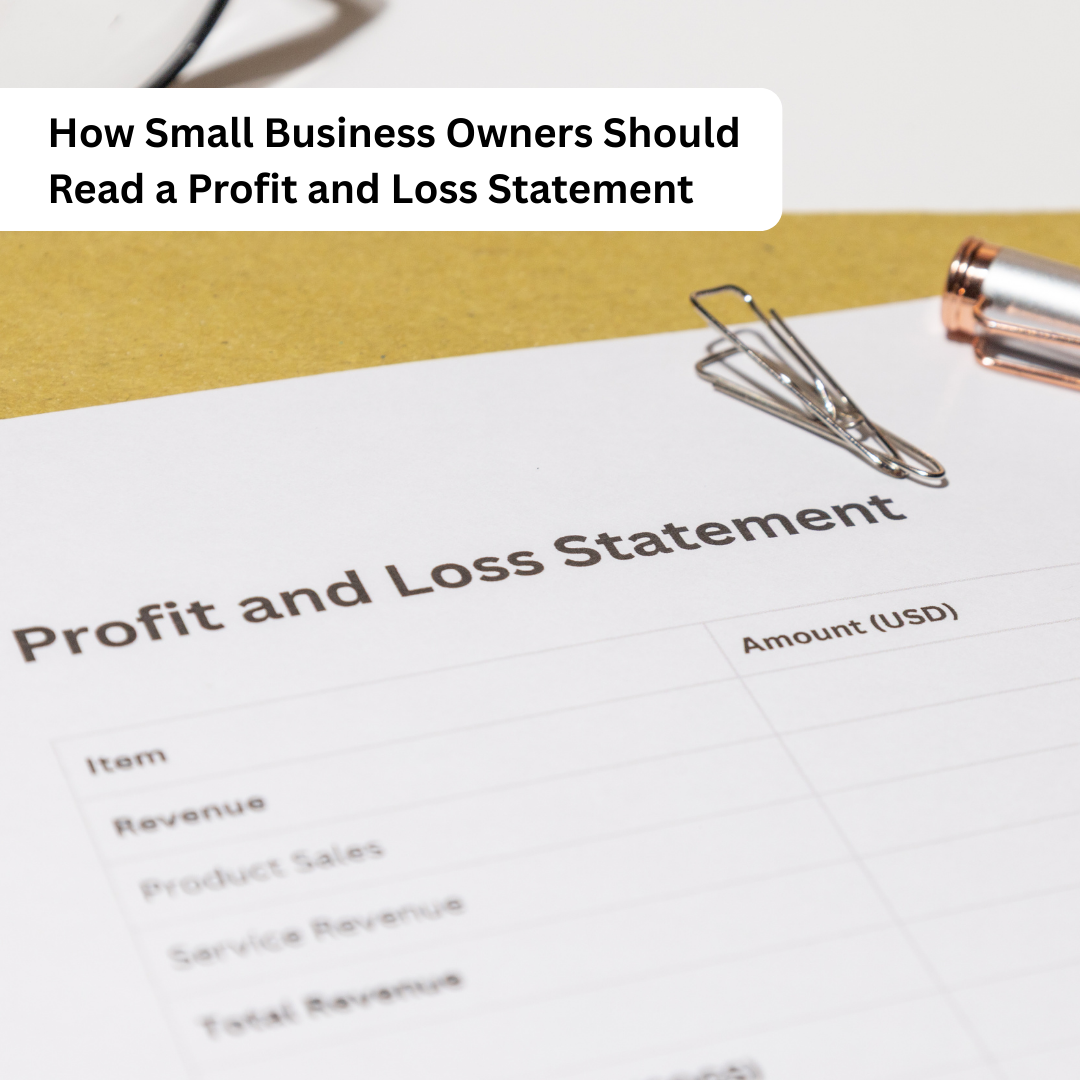
How Small Business Owners Should Read a Profit and Loss Statement
A Profit and Loss statement is one of the most important financial reports for a small business.
It is also one of the most misunderstood.
Many owners glance at the top line, check the profit at the bottom, and move on. But a Profit and Loss statement can tell you far more than whether you made money or not.
Here’s how to read it in a way that actually helps you make better decisions.
When DIY Bookkeeping Stops Working for Small Businesses
Most small businesses start with DIY bookkeeping.
It makes sense early on. The business is simple, transactions are limited, and using software like QuickBooks feels manageable.
But at some point, what used to work starts to feel heavy. Numbers get confusing. Tax season becomes stressful. And bookkeeping starts taking more mental energy than it should.
That doesn’t mean you failed. It means your business has grown.
Here’s how to tell when DIY bookkeeping has stopped working and what to do next.

Why Your Tax Numbers Keep Changing
One week your accountant says you owe one amount.
The next week, the number changes.
Then it changes again.
If you’re wondering why your tax numbers keep moving instead of locking in, you’re not alone. This is one of the most common frustrations business owners face during tax season, especially in February.
The good news is that changing numbers usually mean the process is working, not that something is wrong.
Here’s what’s actually happening behind the scenes.

What to Fix First When Your Books Are Behind and Taxes Are Due
When taxes are due and your books are behind, everything can feel urgent at once.
You might be staring at QuickBooks wondering where to start.
Your accountant is asking questions.
Deadlines are getting closer.
The mistake most business owners make in this moment is trying to fix everything at the same time.
The truth is, you don’t need perfect books right now. You need the right things fixed in the right order.
Here’s what to focus on first when time is tight and pressure is high.

What to Fix in Your Business After Taxes Are Filed
Filing your taxes often brings a mix of relief and frustration.
Relief because it’s finally done.
Frustration because you probably noticed things that didn’t feel quite right.
Maybe the numbers surprised you.
Maybe your accountant had a lot of questions.
Maybe the process felt harder than it should have.
Once taxes are filed, you have a valuable opportunity. You can fix the issues that made tax season stressful so next year feels completely different.
Here’s what to focus on while everything is still fresh.

How to Spot Money Leaks in Your Business
If your business makes decent revenue but never seems to have as much cash as it should, there’s a good chance money is leaking out in small, hard-to-notice ways.
Most money leaks aren’t dramatic. They’re quiet. They show up as small monthly expenses, inefficiencies, or habits that slowly drain profit over time.
The good news is that once you know where to look, they’re much easier to fix.

Why Your Business Feels Busy but Not Profitable
You’re working nonstop.
Your calendar is full.
Money is moving through the business.
And yet, when you look at your bank account or think about what you actually took home, it doesn’t feel worth the effort.
This is one of the most common and frustrating stages of running a small business. And it’s usually not because you’re doing something “wrong.”
Here’s why a business can feel incredibly busy but still not feel profitable, and what to look at if this sounds familiar.
How to Know If Your Books Are Clean Enough to File Taxes
One of the most common questions business owners ask during tax season is:
“Are my books actually ready to file?”
You may have QuickBooks set up. You may even have numbers in there. But that does not always mean your books are clean enough for an accurate tax return.
Before your accountant files anything, here’s how to tell whether your books are truly ready or whether they need cleanup first.
Why Your Accountant Can’t File Until Your Books Are Clean
One of the most frustrating moments during tax season is hearing this from your accountant:
“We can’t file yet. The books need to be cleaned up first.”
To a business owner, that can feel confusing or even irritating. You already sent bank statements. You already answered questions. You just want the return filed and off your plate.
But there’s a good reason this happens, and it has nothing to do with your accountant being slow or overly cautious.

What to Do If You Owe More in Taxes Than You Expected
Opening a tax estimate and realizing you owe far more than expected is one of the most stressful moments for a business owner.
It can feel confusing, frustrating, and even a little scary. Especially if the business had a good year and the cash is not sitting neatly in your bank account anymore.
If this just happened to you, take a breath. Owing more in taxes than expected is common, and there are clear steps you can take to regain control.

Who Actually Needs a 1099 (And Who Doesn’t)
Every January, the same question shows up for small business owners:
“Do I need to send a 1099 for this?”
Some people send too many and create unnecessary work. Others miss required forms and panic when they realize they may be late.
Let’s clear this up in plain language so you know exactly who needs a 1099 and who does not.
How to Fix Your Books Before Your Tax Return Is Filed
Tax season has a way of exposing problems fast.
You send your information to your accountant, and suddenly you start hearing phrases like “these numbers don’t look right” or “we need to clean this up first.” That’s when panic sets in.
The good news is this.
You can still fix your books before your tax return is filed, and doing so can save you money, time, and stress.
Here’s how to approach it the right way.

Why Monthly Bookkeeping Saves You Money in the Long Run
Many small business owners see bookkeeping as something to deal with once a year. Usually at tax time. Usually in a rush.
It feels cheaper to wait. Fewer invoices. Less involvement. One big cleanup instead of ongoing work.
But in reality, waiting almost always costs more.
Here’s why monthly bookkeeping saves money over time and why it is one of the smartest financial decisions a growing business can make.